
What Is This Proposal?
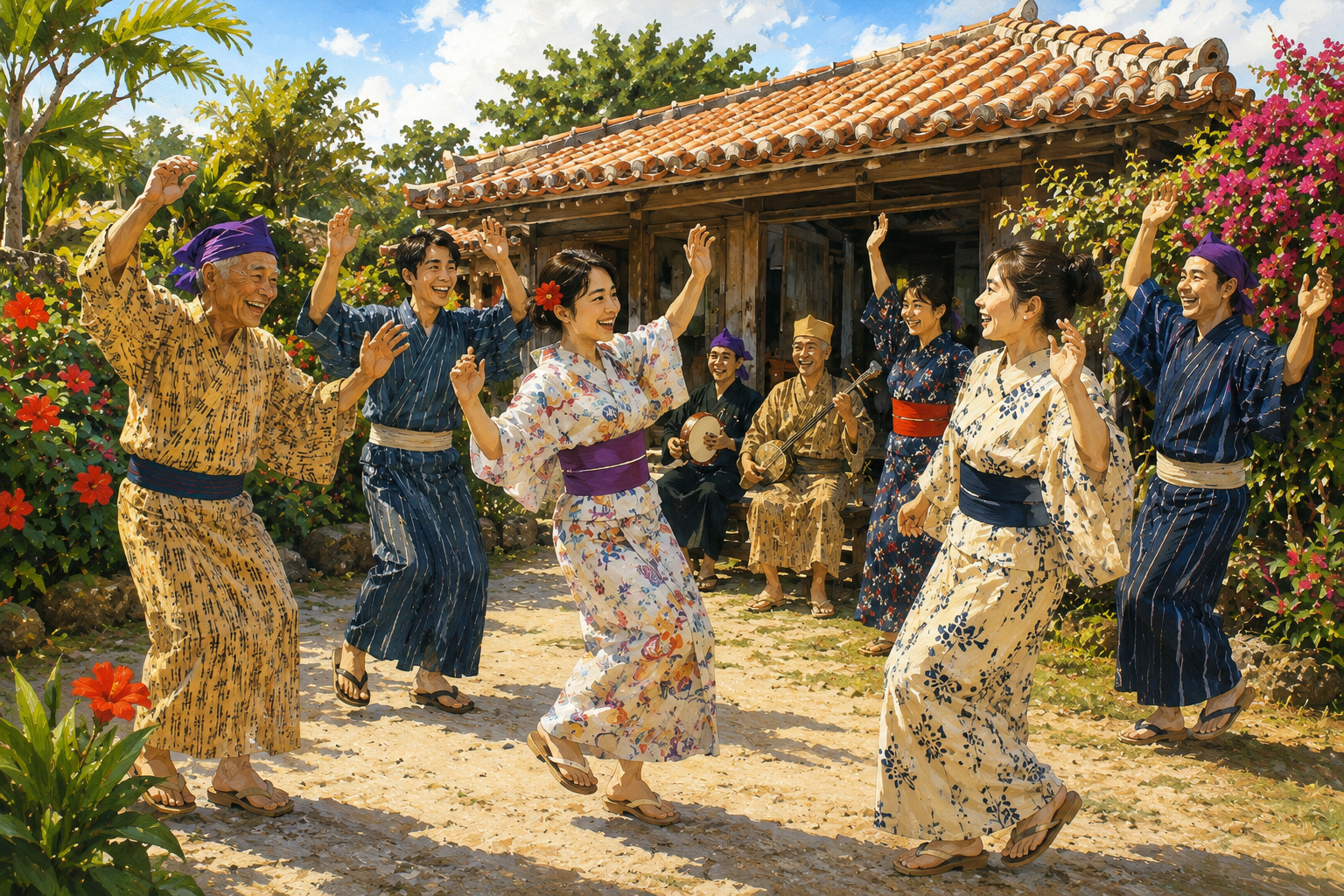
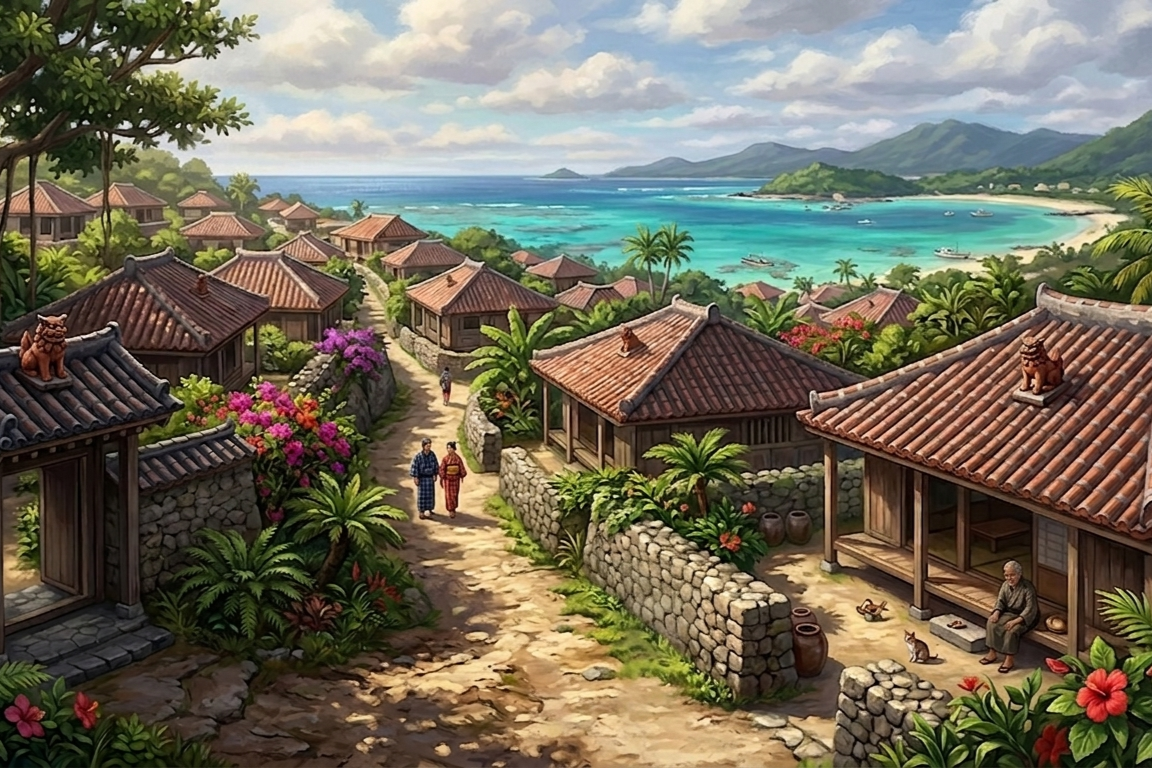
The village landscapes of the Ryukyu Islands have been shaped over generations in response to intense sunlight, typhoons, and sea winds.
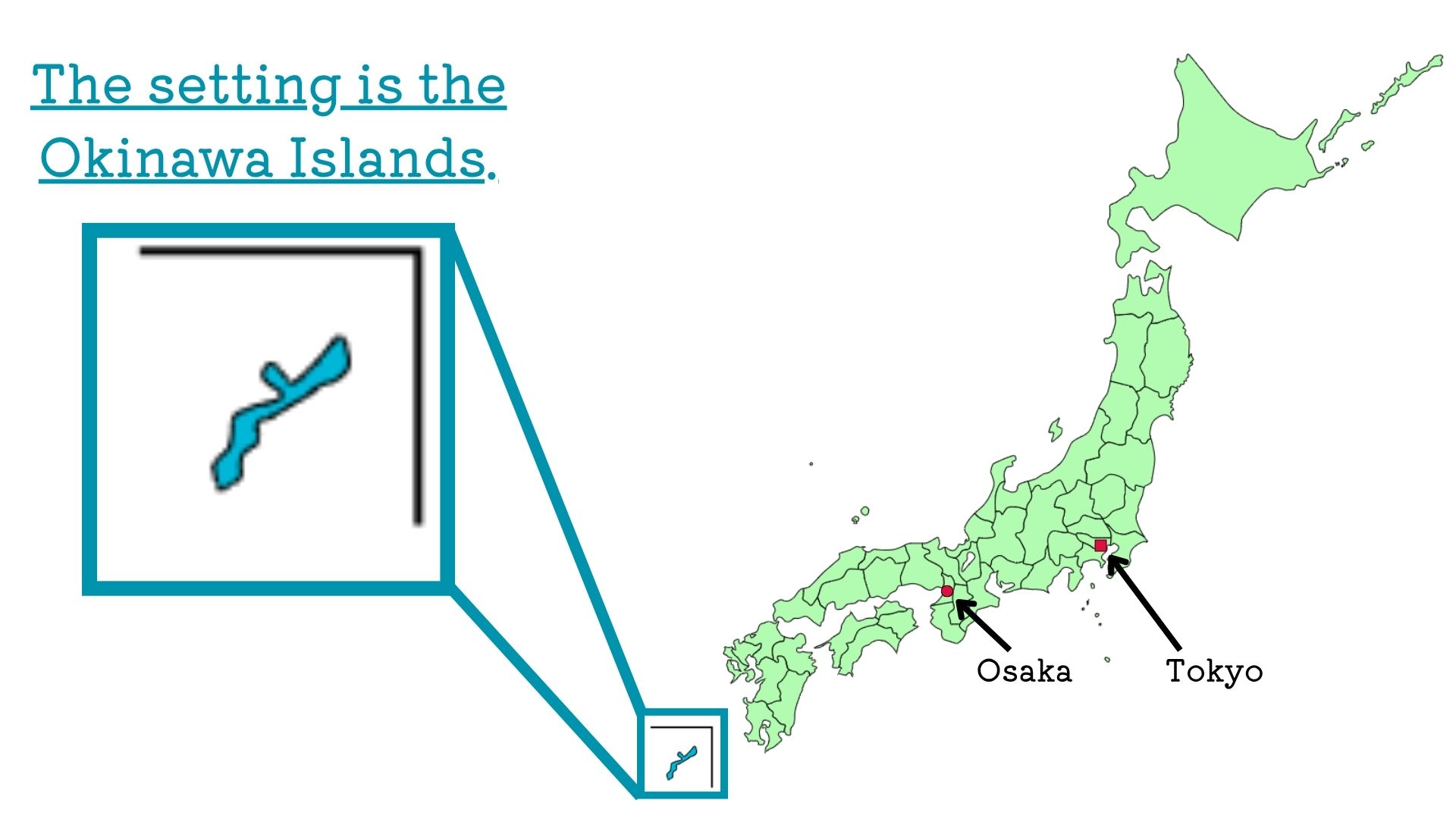
From the traditional architecture, stone walls, and windbreak forests that remain on Tonaki and Taketomi Islands, this proposal traces island life in harmony with nature.
Island life shaped together with nature through the gentle passage of time
Why Propose It as World Heritage?
Traditional Ryukyu Architecture and Island Village Structure
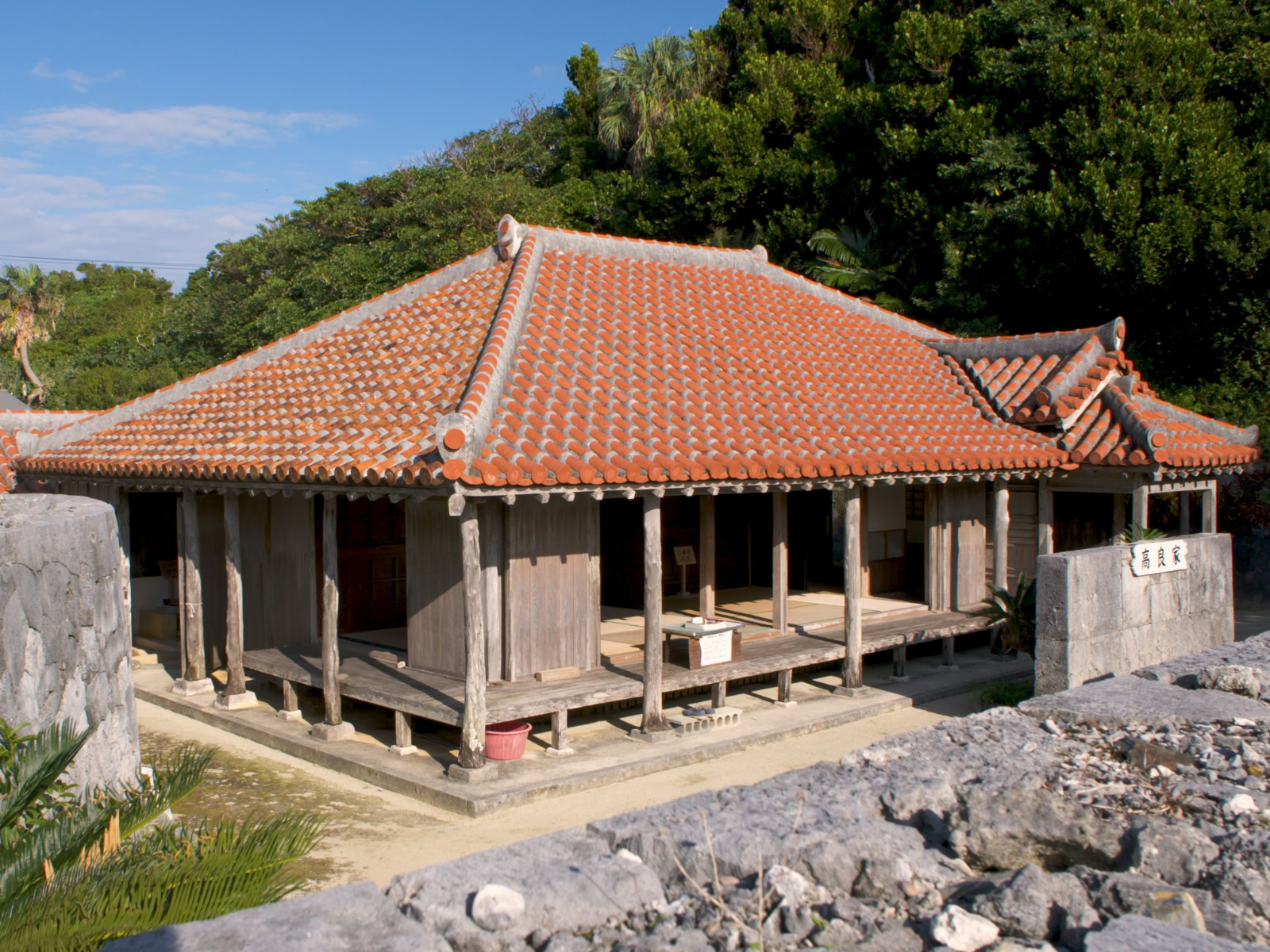
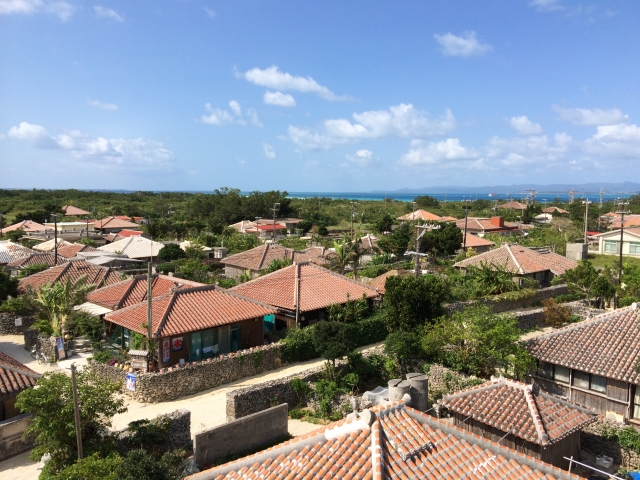
In villages across the Ryukyu Islands, distinctive village landscapes developed around traditional houses with red-tiled roofs.
On Tonaki and Taketomi Islands, these traditional village landscapes have been exceptionally well preserved and passed down to the present day.
It is not just individual buildings, but entire villages that have been preserved as unified landscapes.
Details (Traditional Ryukyu Architecture and Island Village Structure)
In Ryukyu villages, traditional houses with red-tiled roofs are surrounded by stone walls, windbreaks of fukugi trees, and white-sand paths arranged as an integrated landscape. Each element serves a role in protecting daily life from intense sunlight, typhoons, and sea winds.
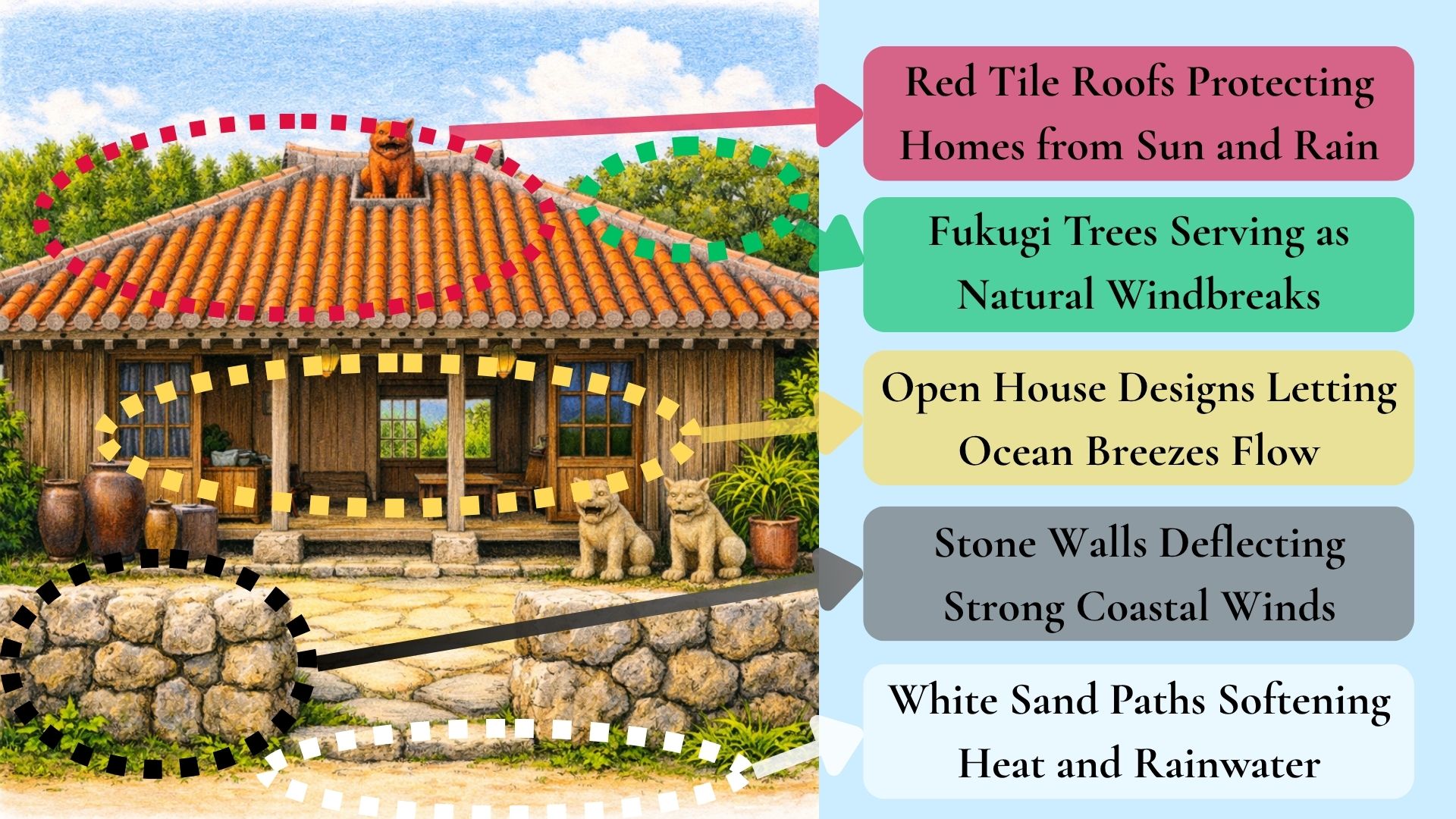
Houses are arranged with appropriate spacing, allowing wind to pass through the village and helping to reduce the heat. Stone walls and fukugi trees also weaken strong winds while protecting against blowing sand and salt damage, helping to protect the buildings and living spaces. In this way, architecture, vegetation, and roads function together, allowing the entire village to adapt to its natural environment.
The great value of Ryukyu villages lies not in individual buildings, but in the preservation of the "landscape of the entire village," shaped as a way of living in harmony with nature.
Adaptation to Typhoons and the Marine Environment
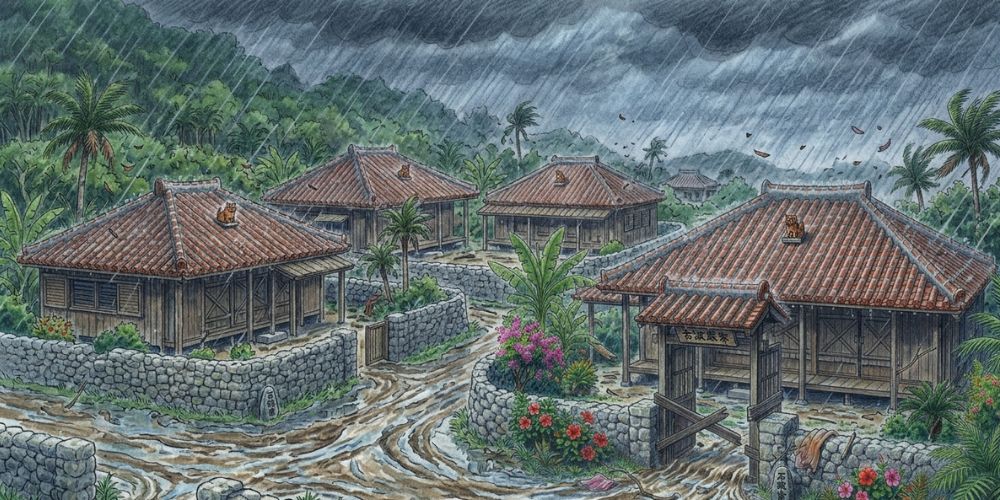
The Ryukyu Islands are located in a marine environment exposed to intense sunlight and sea winds, while also being frequently affected by typhoons.
Rather than attempting to overcome nature, people developed ways of living that worked with its forces, gradually building villages in harmony with their environment.
Architecture, stone walls, windbreak forests, and roads work together to support a way of life in harmony with the forces of nature.
Details (Adaptation to Typhoons and the Marine Environment)
In Ryukyu villages, stone walls and rows of fukugi trees work together to reduce the force of typhoons and sea winds. Stone walls disperse the wind, while fukugi trees serve as windbreaks, protecting buildings and living spaces.
The arrangement of houses and the spaces surrounding individual properties are also designed to allow wind to pass through the village. White-sand paths not only improve drainage, but also reduce the accumulation of heat in the ground caused by intense sunlight, helping to create a comfortable living environment.
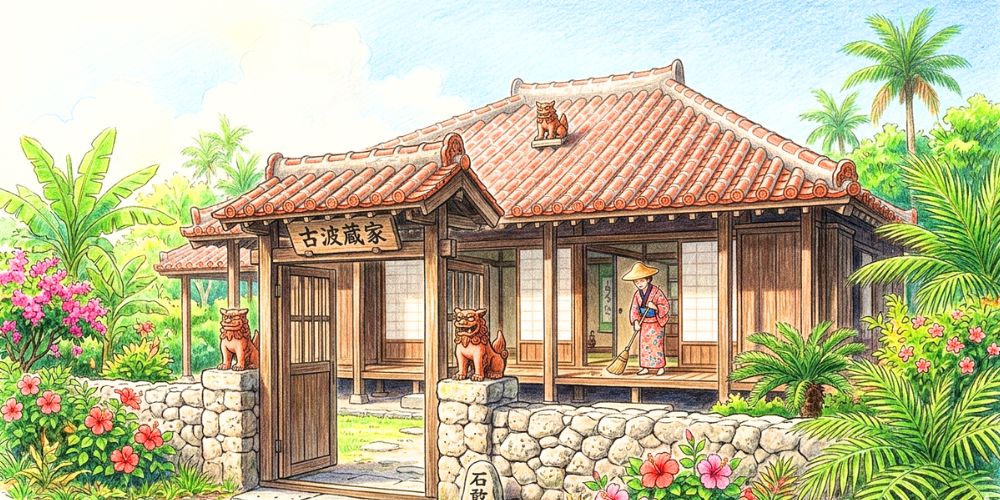
In this way, Ryukyu villages have developed as cultural landscapes adapted to their environment, shaped not by suppressing the forces of nature, but by living with them and making skillful use of their characteristics.
Across the Ryukyu Islands, distinctive village landscapes have developed in adaptation to the island environment of typhoons, intense sunlight, and sea winds, with red-tiled houses, stone walls, windbreak forests, and white-sand paths forming an integrated whole. On Tonaki and Taketomi Islands, these traditional landscapes have been passed down to the present day.
A group of heritage sites conveying the distinctive village landscapes of the Ryukyu Islands, shaped in harmony with their island environment.Comparison with World Heritage Sites
By comparing these villages with existing World Heritage sites known for traditional settlements and climate-adaptive architecture, the value of the “Ryukyu Architectural Villages of Tonaki and Taketomi” becomes even clearer. Click ClickTap the image to see the comparison.
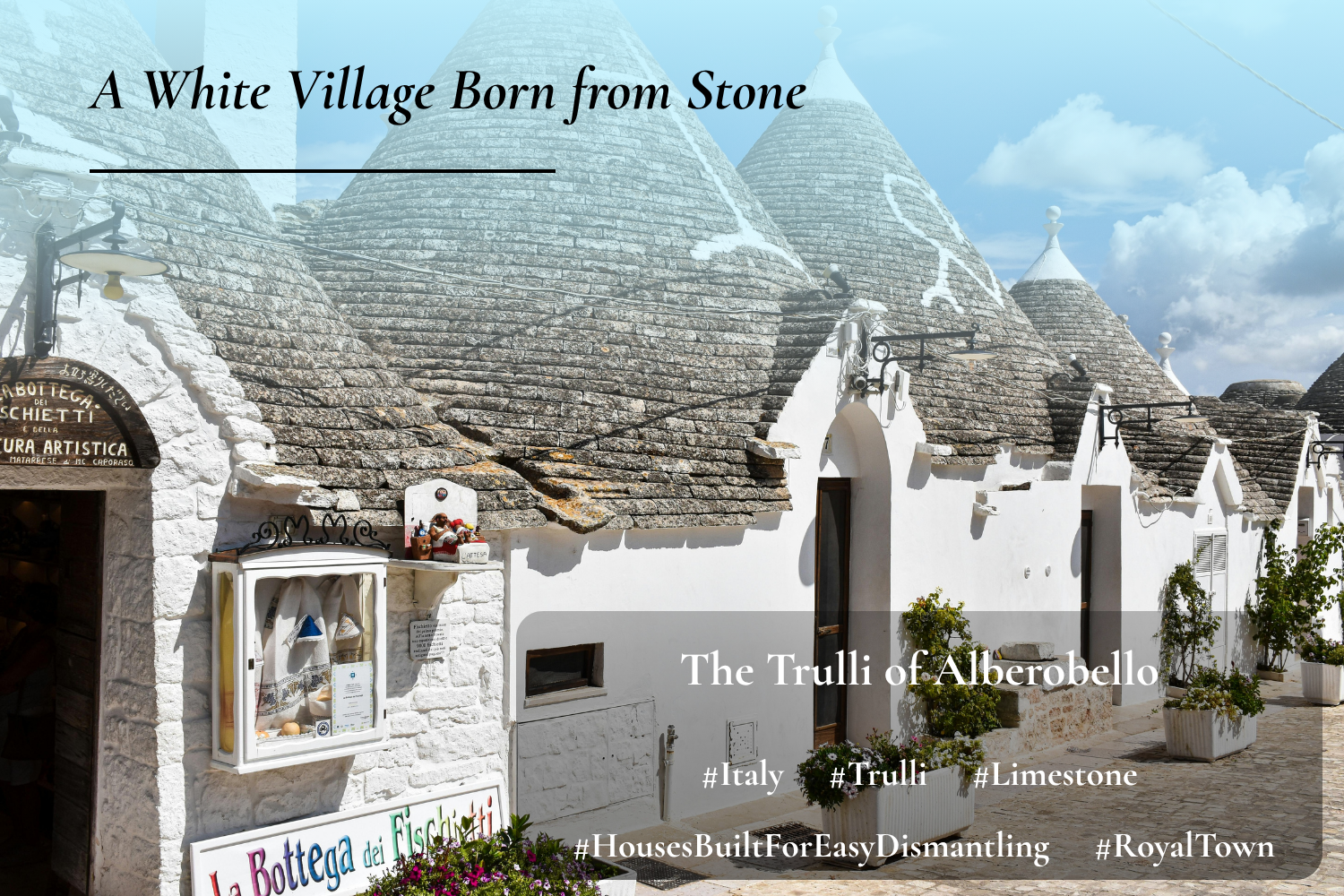
Similarity:Unique traditional houses adapted to local natural environments and building materials have been preserved as part of the settlement landscape
Difference:Alberobello features stone architecture adapted to a dry climate, while Ryukyu villages developed wooden and stone-wall-based settlement structures adapted to typhoons and hot, humid conditions
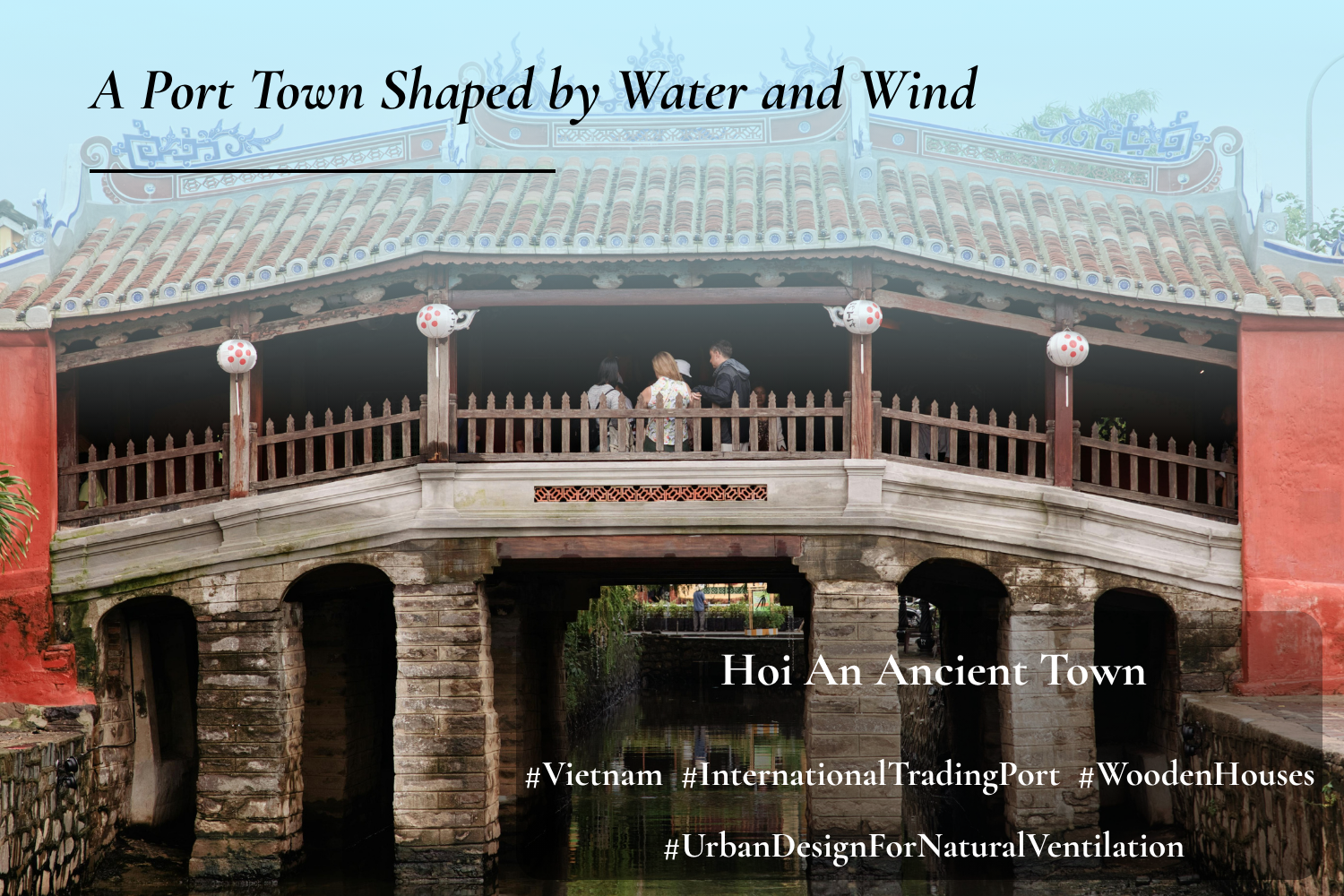
Similarity:Wooden architecture and townscapes designed for ventilation were developed in response to hot and humid environments
Difference:Hoi An developed as an international trading port city, whereas Ryukyu villages are island settlements with a more rural character
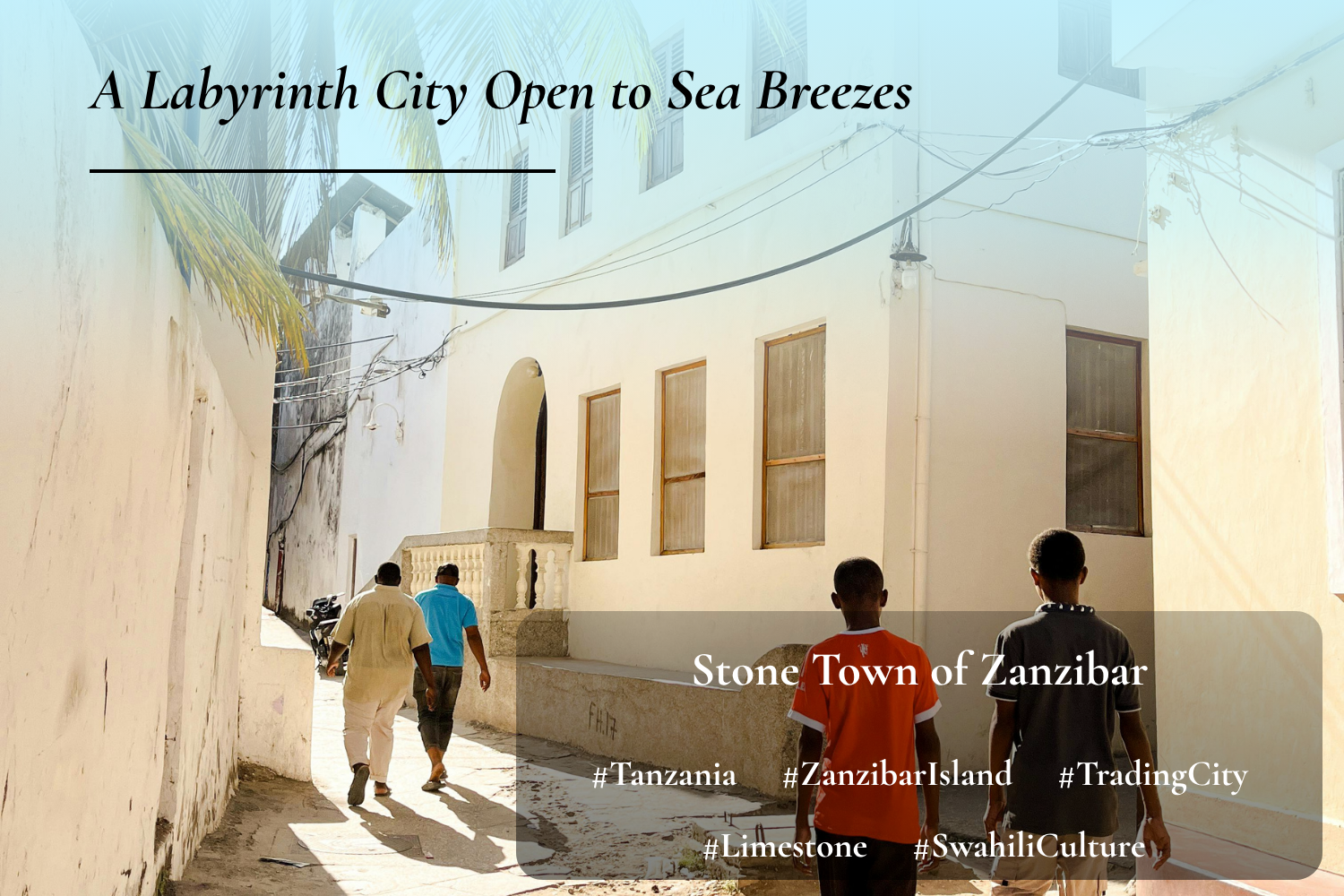
Similarity:Both developed within maritime environments and feature streets and architecture adapted to strong sunlight and salty sea winds
Difference:Stone Town developed stone architecture as a trading city, while Ryukyu villages are centered around low-rise wooden houses and stone-wall landscapes
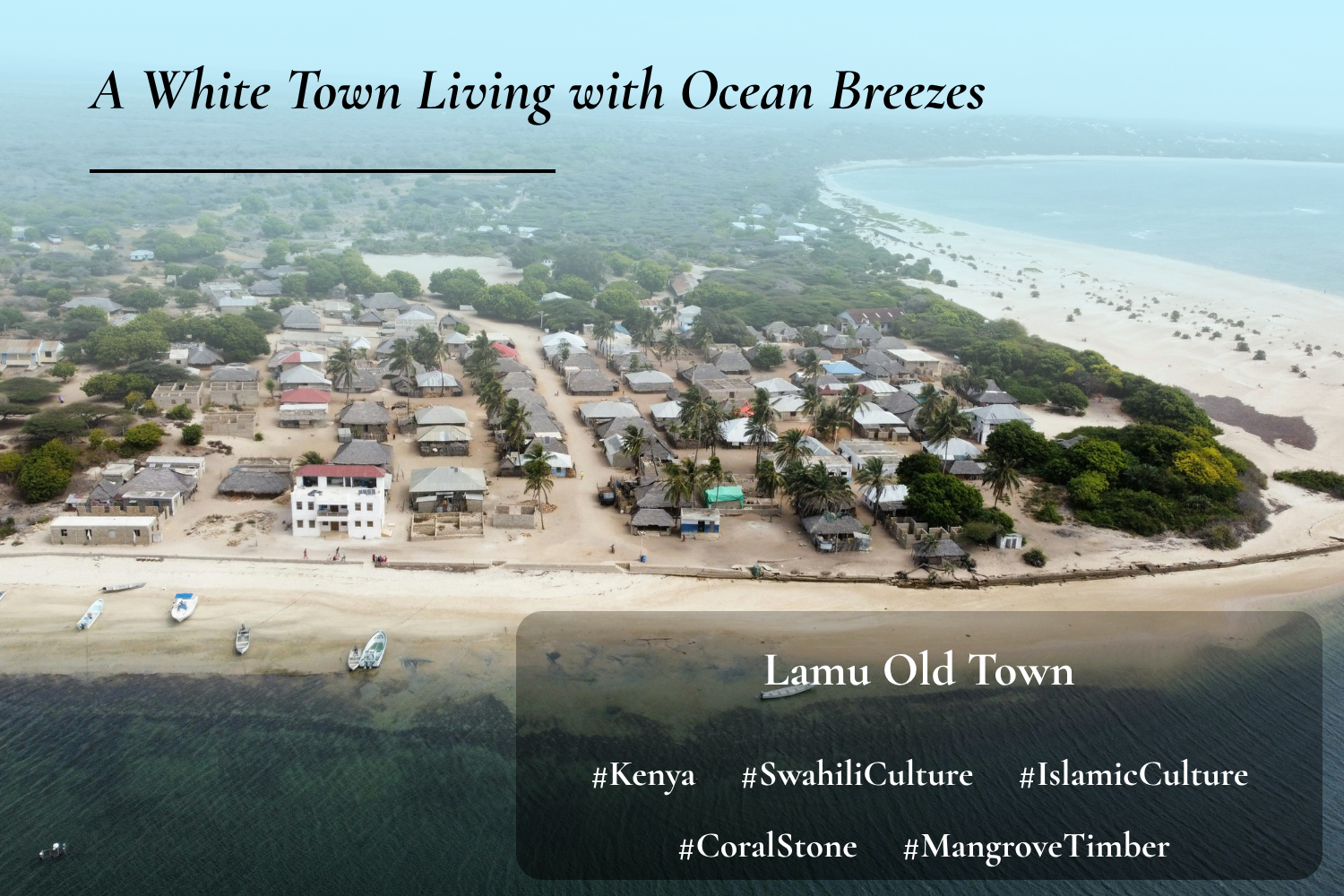
Similarity:Traditional houses emphasizing ventilation and protection from sunlight remain preserved within maritime cultural regions
Difference:Lamu Old Town is an urban settlement rooted in Islamic and Swahili culture, while Ryukyu villages are island rural landscapes shaped by the culture of the Ryukyu Kingdom
Next is a comparison with Japanese World Heritage sites. ClickTap the image to see the comparison.
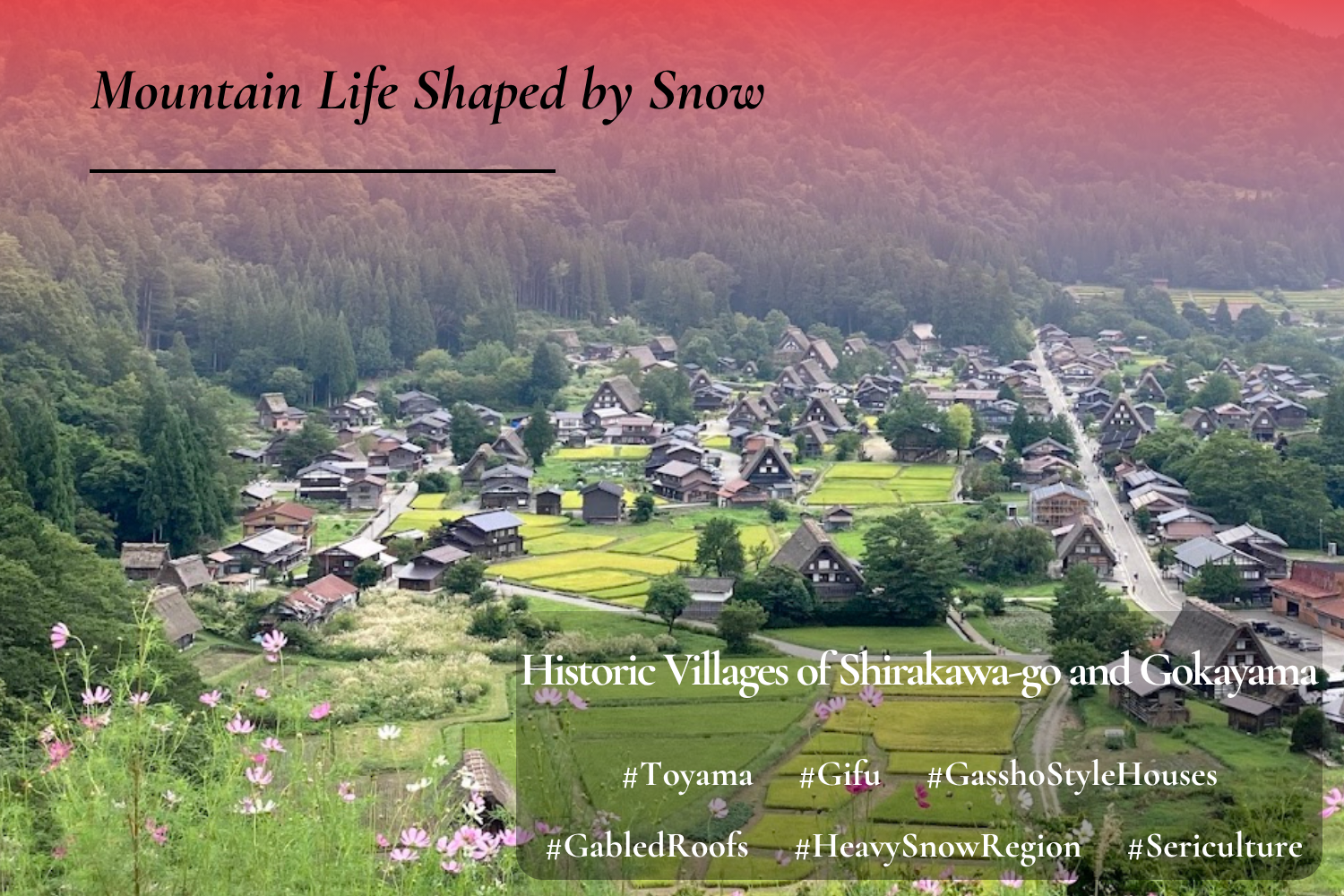
Similarity:Traditional houses and village landscapes adapted to severe natural environments have been preserved together with local ways of life
Difference:Shirakawa-go and Gokayama feature steeply sloped roofs designed for heavy snowfall, while Ryukyu villages are characterized by low-rise structures and stone-wall landscapes adapted to typhoons and strong winds
Existing World Heritage sites each demonstrate traditional settlement landscapes shaped through adaptation to regional climates and natural environments. In contrast, the “Ryukyu Architectural Villages of Tonaki and Taketomi” developed a unique disaster-adaptive settlement structure combining stone walls, Fukugi trees, and low-rise houses in response to the distinctive natural conditions of the Ryukyu Islands, including typhoons, strong winds, and hot, humid climates. These villages represent a remarkable achievement of environmentally adaptive settlements within maritime Asia.
Why These Villages Were Selected
At this point, let us examine the significance of the “Ryukyu Architectural Villages of Tonaki and Taketomi” within Japan. The reasons can be summarized in the following three points. Click "Click""Tap" to view the details.

The Ryukyu Islands are among the regions of Japan most heavily affected by typhoons and strong winds. On Tonaki Island and Taketomi Island, a unique settlement structure was developed by combining stone walls, Fukugi trees, and low-rise houses in order to redirect strong winds. This is not merely a scenic landscape, but a system of environmentally adaptive architecture created for coexistence with natural disasters.

This heritage group is distinguished by the fact that it continues to preserve settlement structures and lifestyles dating back to the Ryukyu Kingdom period. Red-tiled roofs, white-sand roads, stone walls, and sacred sites known as utaki together form a cultural landscape that preserves not only architecture, but also faith and community life. It is an important example demonstrating the distinctiveness of the Ryukyu cultural sphere, which differs from mainland Japan.

Japan contains many traditional settlements, but island-type villages closely connected to maritime environments, such as Ryukyu architectural villages, are relatively rare. In particular, Tonaki Island and Taketomi Island continue to preserve their historic landscapes while remaining actively inhabited, giving them exceptional rarity as preserved examples of traditional settlements within maritime Asia.
In this way, this heritage group represents one of Japan’s most important examples of environmentally adaptive architecture and the uniqueness of Ryukyu culture. It holds great value for preserving both the disaster-prevention wisdom developed in typhoon-prone regions and the living culture deeply rooted in island communities.
Components of the property
From here, we introduce the component assets that shape this proposal.

Criteria
Let us now organize the values discussed so far in relation to the World Heritage selection criteria. Through this perspective, the significance of the “Ryukyu Architectural Villages of Tonaki and Taketomi” becomes even clearer.
Testimony to Ryukyu Culture
A distinctive way of life and culture passed down through the villages of the islands
Tonaki and Taketomi Islands preserve traditional architecture and ways of life developed across the Ryukyu Islands, including red-tiled houses, stone walls, and enclosed residential properties. These provide valuable evidence of the distinctive lifestyle and culture of the Ryukyu Islands, shaped through adaptation to the island environment.
The Landscape of Ryukyu Villages
Distinctive island villages where architecture, stone walls, windbreak forests, and roads form an integrated whole
Tonaki and Taketomi Islands preserve distinctive Ryukyu village landscapes centered on red-tiled houses and integrating stone walls, windbreaks of fukugi trees, and white-sand paths. These landscapes represent an important stage in the development of traditional architecture and village formation in the Ryukyu Islands.
Adaptation to the Natural Environment
Island life shaped in harmony with typhoons, sea winds, and intense sunlight
The people of the Ryukyu Islands developed their way of life in adaptation to typhoons, sea winds, and intense sunlight, combining the arrangement of houses with stone walls, windbreak forests, roads, and other elements. The village landscapes, where architecture and land use are closely connected with the natural environment, preserve a traditional way of life shaped in harmony with the island environment.
In Closing
The warmth and practical wisdom of the Shimanchu people still remain today in the stone walls, Fukugi trees, and red-tiled houses of the villages. The Ryukyu way of life, shaped through coexistence with nature, continues to live on within the landscapes of these islands.
A “World Heritage Site” like this—why not?